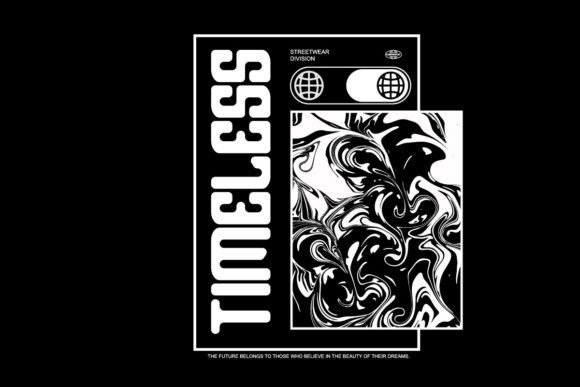
Streetwear Graphic Tee Design Templates: A Practical Guide for Brands and Creators
Launching a clothing line or refreshing an existing merchandise collection often hits a bottleneck when it comes to visual identity. For many entrepreneurs, freelancers, and hobbyists, the gap between having a concept and executing a professional-grade graphic is significant. This is where Streetwear Graphic Tee Design Templates serve as a vital bridge. These resources are not merely clip art; they are comprehensive design systems that provide a foundation for unique and aesthetic urban streetwear collections. When utilized correctly, they allow creators to produce custom printed clothing and brand assets that rival established fashion houses without requiring years of illustration training.
The appeal lies in efficiency and versatility. High-quality templates offer a starting point that respects current design trends while remaining flexible enough to establish a distinct brand voice. However, treating these assets as finished products rather than foundational tools is a common pitfall. To truly leverage these resources for streetwear fashion brands or personal projects, one must understand both their technical capabilities and their strategic application.
Understanding the Value of Vector-Based Assets
Before downloading or purchasing any design pack, it is essential to distinguish between raster images and true vector sources. Many beginners mistakenly assume all digital graphics are created equal, leading to frustration during the printing phase. The specific collection referenced here includes 100 vector source files in EPS format alongside high-resolution JPGs. Understanding this distinction prevents costly production errors.
Vector files are mathematical constructions of lines and curves, meaning they can be transformed, scaled up or down, and recolored without losing quality. This is non-negotiable for apparel. A design that looks crisp on a computer screen at 5 inches wide may become pixelated and unprofessional when blown up to cover the back of an oversized hoodie. Raster files (like standard JPGs) have fixed pixel dimensions, whereas EPS vectors remain sharp at any size. Always verify that the "editable" files you acquire are genuine vectors before committing to them for sublimation or screen printing.
Common Mistakes in Template Selection and Usage
Even with high-quality assets, the final product depends entirely on how the creator manipulates them. Several recurring issues undermine the potential of Streetwear Graphic Tee Design Templates, often resulting in generic merchandise that fails to connect with an audience.
Neglecting Customization Depth
The most frequent error is using a template "as is." While the designs in this collection are extraordinary out of the box, relying solely on the default arrangement creates a cookie-cutter aesthetic. Urban streetwear thrives on authenticity and subcultural signaling. If your design looks identical to a stock preview, it loses its cultural currency. You should view the included elements—typography, shapes, textures, and illustrations—as a modular kit. Rearrange layers, combine elements from different files, and integrate your own photography or hand-drawn accents. The goal is to use the template to accelerate your workflow, not to replace your creative input.
Overlooking Print Production Specifications
A beautiful screen design does not always translate to fabric. Designers often forget to account for color profiles, bleed areas, and safe zones. Since these files are intended for t-shirt sublimation and other merchandise, you must ensure your workspace matches your printer’s requirements. Working in RGB mode because it looks vibrant on-screen will lead to dull, inaccurate prints. Convert your workspace to CMYK early in the editing process. Additionally, check the resolution of any embedded raster textures within the vector file. Just because the main artwork is vector-based does not guarantee every texture overlay is print-ready at large scales.
Ignoring Licensing and Originality
While not explicitly detailed in every product description, understanding usage rights is part of professional due diligence. Ensure the license allows for commercial resale of physical goods. Furthermore, consider the saturation of the market. If a specific template pack has been widely marketed, there is a higher chance of visual overlap with competitors. Mitigate this by heavily modifying text and color palettes. Your brand’s typography should be consistent across all designs; swapping the template’s default font for your brand’s proprietary typeface instantly increases perceived value and uniqueness.
Maximizing Editability and Workflow Efficiency
The promise that you can "easily edit vector files in any vector graphics software" requires some practical nuance. Compatibility varies between Adobe Illustrator, CorelDRAW, Affinity Designer, and Inkscape. While EPS is a universal exchange format, complex gradients, mesh fills, or proprietary effects may not transfer perfectly between different programs.
- Test Before Committing: Download a sample or open one file immediately after purchase to verify that layers are organized logically and editable. Poorly constructed vectors with merged paths or expanded text can be more work to fix than designing from scratch.
- Layer Management: Professional templates separate background, foreground, text, and effects into distinct layers. If everything is flattened on a single layer, customization becomes tedious. Look for files that respect non-destructive editing workflows.
- Text Handling: Be aware that fonts used in the template may not be included due to licensing restrictions. You will likely need to replace placeholder text with fonts you own. Choose replacements that match the weight and mood of the original design to maintain visual balance.
Evaluating Quality Before Integration
When assessing whether a specific Streetwear Graphic Tee Design Template collection fits your needs, look beyond the promotional mockups. Mockups are designed to sell; source files are designed to build. Request or examine raw previews of the actual vector artwork. Check for clean anchor points and logical grouping. Messy vector construction slows down editing and can cause artifacts during embroidery or direct-to-garment printing.
Also, evaluate the aesthetic cohesion of the pack. Does the collection offer enough variety to sustain a full drop, or just three strong designs padded with filler? A robust library of 100 source files suggests ample material for experimentation, but only if the style aligns with your target demographic. Urban aesthetics vary wildly—from Y2K revival and brutalist typography to minimalist line work and psychedelic surrealism. Ensure the template’s specific flavor of streetwear resonates with the community you intend to serve.
Technical Considerations for Delivery and Storage
Practical file management is often overlooked until something goes wrong. These assets are compressed in one ZIP format, which is standard for delivery but requires proper handling. Always extract files to a dedicated project folder rather than editing directly from the compressed archive. Editing inside a ZIP can corrupt data or prevent software from saving changes correctly.
Given the volume of 100 EPS files plus high-resolution JPGs, implement a clear naming convention immediately upon extraction. Renaming files based on project, theme, or date saves hours of searching later. Back up the original, unaltered master files in cloud storage or an external drive. Treat the downloaded pack as your raw material inventory; once you begin modifying files, save iterations separately so you can always revert to the pristine source if a design direction fails.
Making the Final Decision
Streetwear Graphic Tee Design Templates are powerful accelerators for creators who understand their role in the design ecosystem. They solve the blank canvas problem and provide professional-grade building blocks for custom printed clothing. Success comes from respecting the technical requirements of vector art, avoiding superficial customization, and integrating these tools into a broader, authentic brand strategy.
Before adding this collection to your toolkit, confirm that your software supports EPS editing, that you have a plan for meaningful customization, and that the aesthetic aligns with your long-term vision. When approached with this level of intentionality, these templates transform from simple downloads into foundational assets for a sustainable fashion venture. The difference between amateur merchandise and a respected streetwear label often lies not in the raw assets themselves, but in the thoughtful, informed execution of those assets.