Evaluating the Dialysis Nurse Mom Graphic for Personalized Gifts and Professional Identity
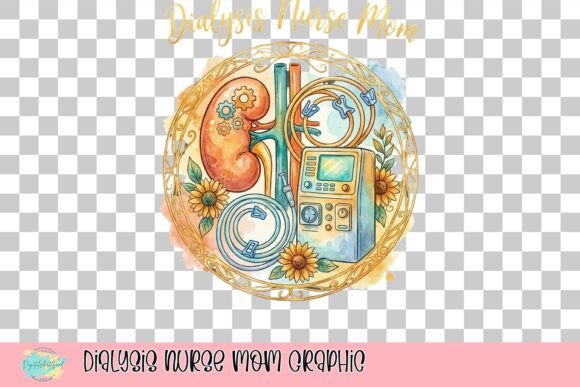
Selecting visual assets that accurately represent dual identities requires careful consideration of artistic style, technical quality, and emotional resonance. The Dialysis Nurse Mom Graphic distinguishes itself through a specific combination of medical accuracy and maternal warmth, rendered in a watercolor aesthetic that softens the clinical nature of nephrology nursing. Unlike generic medical clip art or stark vector illustrations often found in stock libraries, this design integrates a kidney, dialysis machine, and related equipment within a decorative gold border adorned with sunflowers. This synthesis creates a unique value proposition for adults seeking to honor both professional dedication and motherhood without sacrificing the dignity of either role.
When comparing options for personalized apparel, mugs, or digital displays, understanding the distinct characteristics of this watercolor-style illustration is essential. It serves a different function than minimalist line art or bold typography-based designs. While text-heavy graphics excel at conveying slogans or humor, the Dialysis Nurse Mom Graphic focuses on symbolic representation. The inclusion of sunflowers adds a layer of organic vitality that contrasts effectively with the mechanical depiction of the dialysis machine, creating a balanced composition suitable for audiences who find standard medical imagery too sterile or impersonal. This balance makes it particularly relevant for gifts intended to celebrate resilience and care rather than just job function.
Artistic Style and Emotional Resonance Compared to Alternatives
The primary differentiator of this graphic is its watercolor medium. In the marketplace of nurse-themed merchandise, designs typically fall into three categories: retro vintage, modern minimalist, and illustrative realism. Retro styles often rely on distressed textures and nostalgic color palettes, which can sometimes feel dated or disconnected from current nursing practice. Modern minimalist vectors offer clean lines and scalability but frequently lack emotional depth. The Dialysis Nurse Mom Graphic occupies the illustrative realism space, using fluid brushstrokes and blended colors to evoke a sense of humanity.
This stylistic choice impacts how the image is received by different demographics. For a dialysis nurse who views her profession as an art of caregiving, the soft edges and natural lighting of the watercolor style align better with her self-perception than a rigid icon set. However, there are tradeoffs to consider. Watercolor aesthetics do not always reproduce well on dark fabrics without significant underprinting, whereas high-contrast vector art maintains visibility across all substrate colors. When evaluating this graphic against bolder alternatives, one must weigh the desire for artistic nuance against the practical requirements of the intended end product. If the goal is high-visibility team uniform identification, a simpler graphic may be superior. If the goal is a meaningful personal gift or keepsake, the intricate detail of this design offers greater sentimental value.
Technical Specifications and Format Versatility
Beyond aesthetics, the utility of any digital asset depends heavily on its file format and resolution. The Dialysis Nurse Mom Graphic is provided in PNG format, which supports transparency and lossless compression. This is a critical distinction when compared to JPEG alternatives commonly found on general stock photo sites. JPEGs compress image data, often introducing artifacts around fine details like the gold border or individual sunflower petals, and they cannot support transparent backgrounds. A PNG ensures that the design can be layered seamlessly onto t-shirts, tote bags, or digital stationery without an unsightly white box surrounding the artwork.
Users should verify the pixel dimensions before purchasing, as "high-quality" is a relative term in digital printing. For direct-to-garment (DTG) printing or sublimation, a minimum resolution of 300 DPI at the desired print size is standard. While this graphic is described as suitable for various products, comparing it to scalable vector formats (SVG/EPS) reveals a limitation: raster images like PNGs have a fixed maximum size. If a user intends to create large-format items such as wall tapestries or oversized banners, they may need to seek out a vector version or accept potential softness in the print. For standard consumer goods like mugs and apparel up to adult XL, the PNG format of this Dialysis Nurse Mom Graphic typically provides sufficient fidelity, making it a practical choice for most personalization projects.
Symbolism and Niche Specificity in Medical Graphics
Specificity is often the deciding factor between a generic gift and a cherished one. General "nurse mom" graphics usually feature stethoscopes, caps, or hearts. These symbols apply broadly across nursing specialties but fail to acknowledge the specialized technical skills required in nephrology. The Dialysis Nurse Mom Graphic explicitly depicts dialysis-specific equipment, validating the unique expertise of renal nurses. This level of detail matters significantly to professionals who feel their specialty is often overlooked in broader healthcare narratives.
However, this specificity also defines the graphic’s limitations. It is not interchangeable. A peritoneal dialysis nurse might find the hemodialysis machine depiction inaccurate for their specific practice setting, just as a transplant coordinator would find the equipment irrelevant. When researching options, buyers must confirm that the illustrated equipment matches the recipient's actual clinical environment. Comparing this to broader medical art, the tradeoff is clear: increased relevance for a niche audience comes at the cost of universal applicability. For those within the hemodialysis sphere, this targeted symbolism outweighs the versatility of generic nursing art; for those outside it, the graphic loses its primary value proposition.
Evaluating Use Cases: Apparel vs. Digital vs. Decor
The decision to utilize this specific design should be driven by the intended application. Different mediums interact with the graphic’s elements in unique ways:
- Apparel: The gold border and sunflower accents provide excellent contrast on navy, black, or charcoal garments, which are common in nursing uniforms. However, the watercolor texture may appear muted on heathered fabrics. Solid cotton or polyester blends generally yield the best results for preserving the delicate shading of the kidney and machine illustrations.
- Ceramics and Drinkware: The circular or oval framing implied by the decorative border adapts naturally to the curved surface of mugs and tumblers. Unlike rectangular text-based designs that can distort on curved surfaces, this organic composition maintains visual integrity during the wrap process.
- Digital Downloads and Stationery: As a digital asset, the transparency of the PNG allows for integration into social media headers, email signatures, or digital planners. Here, the gold border acts as a built-in frame, reducing the need for additional design work. Compared to hiring a custom illustrator, using this pre-made graphic offers immediate availability and lower cost, though it lacks exclusive ownership rights.
- Tote Bags and Accessories: The detailed nature of the design holds up well on canvas totes, where the natural fiber complements the watercolor aesthetic. On glossy vinyl stickers, however, the subtle gradients may benefit from a white ink underlay to prevent the background material from dulling the colors.
Making the Final Selection Decision
Choosing the Dialysis Nurse Mom Graphic over other available resources ultimately hinges on aligning the recipient’s identity with the design’s specific attributes. It is the optimal choice when the objective is to validate the intersection of renal nursing expertise and maternal pride through a lens of artistic beauty. It excels in scenarios where the recipient values aesthetic sophistication over bold messaging and where the specific depiction of dialysis equipment carries emotional weight.
Conversely, readers should explore alternative options if the priority is humorous content, if the recipient works in a non-hemodialysis renal specialty, or if the project requires massive scalability beyond standard merchandise sizes. Additionally, those seeking a strictly corporate or institutional look may find the sunflowers and gold border too ornamental for official department branding. By objectively assessing these factors—artistic tone, technical format, symbolic accuracy, and end-use compatibility—buyers can determine whether this specific graphic fulfills their needs or if a different category of medical illustration would serve as a more effective solution. The strength of this design lies not in being a universal tool, but in being a precisely crafted resource for a distinct and dedicated community of healthcare professionals and mothers.